
You’ve got too much stuff. The house is full, the garage is pretending it’s a storage unit, and your loft is one dodgy step away from turning you into a cautionary tale.
So you start looking at storage and hit the classic choice:
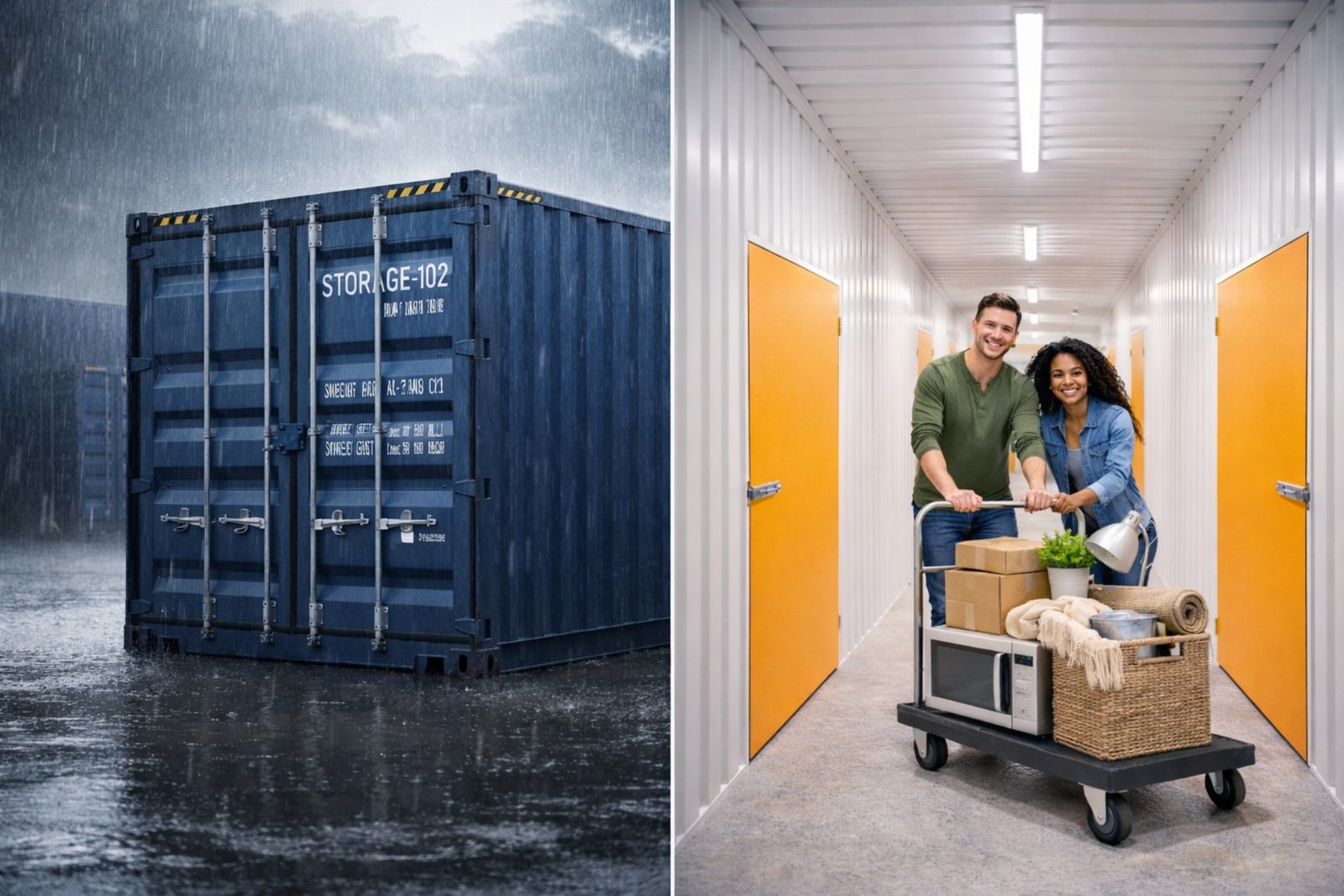
- Shipping container storage (a yard full of metal containers you drive up to)
- Indoor self storage (units inside a building)
Both can work. One often looks cheaper up front. The other is usually kinder to your belongings and your sanity. Here’s the straight comparison, Tamworth-style.
The 30-second answer (because you’re busy)
Choose shipping container storage if:
- You’re storing rugged stuff (tools, bikes, garden kit, site gear, “it’s fine if it gets a bit damp” items)
- You want drive-up access right by your door
- You’re cost-led and can tolerate bigger temperature swings
Choose indoor storage if:
- You’re storing furniture, mattresses, clothes, photos, books, electronics, paperwork
- You want cleaner, more stable conditions
- You care about layers of security
- You’ll visit often and don’t fancy doing it in sideways rain
If you only read one section, read that. If you want the “why”, keep going.
1) Damp and condensation: the silent killer
Containers are steel. Steel + UK weather = condensation risk. That’s not a sales pitch, it’s physics.
What happens:
- Containers warm up during the day (yes, even in the Midlands)
- They cool down at night
- Moisture in the air condenses on the inside surfaces
- Over time, moisture gets cosy with your stuff
Typical victims:
- Sofas, soft furnishings, clothes (musty smell, mould spots)
- Mattresses (don’t do it to yourself)
- Cardboard boxes (they absorb moisture, sag, split)
- Paperwork (warping, mildew)
- Electronics (corrosion risk)
- Wooden furniture (swelling, cracking, staining)
Indoor storage reduces the extreme temperature swings that cause most condensation problems. It’s still the UK, so humidity exists, but conditions are generally more stable and cleaner than a metal box outside.
Rule of thumb:
If it can mould, warp, rust, or stink, indoor storage wins.
If you must use a container, you can reduce risk by:
- Using plastic tubs instead of cardboard
- Keeping items off the floor (pallets/shelving)
- Leaving air gaps around items
- Avoiding any “slightly damp” items (they’ll become fully mouldy items)
2) Security: it’s not “safe vs unsafe”, it’s “layers vs fewer layers”
Good container sites can be secure: fencing, gates, CCTV, lighting, sometimes alarms and on-site staff. Same for indoor sites.
The difference is usually how many barriers sit between “someone” and “your unit”.
Container yard (typical):
- Perimeter security (gate/fence/CCTV)
- Individual container lock
- Perimeter/building security
- Controlled access
- Internal corridors
- Your individual locked unit
That layering matters because most theft is opportunistic. Fewer barriers = easier target if someone gets on site.
Rule of thumb:
If it’s valuable, sensitive, or sentimental, choose the option with more layers.
3) Access and convenience: how much do you hate British weather?
Container storage wins on one thing: drive up, open doors, load/unload. If you’re shifting heavy kit, that’s genuinely useful.
But the trade-off is the “yard experience”:
- Rain, wind, cold hands
- Mud/puddles/ice depending on the surface
- Dark winter evenings
- Doing Tetris with boxes while your face goes numb
Indoor storage is usually:
- Cleaner and better lit
- Not weather-dependent
- Easier to organise properly
- Less miserable if you’re doing multiple trips
Rule of thumb:
If you’ll visit often, indoor storage saves your sanity (and your back, because you’re less rushed).
4) What are you storing? This decides it faster than any price comparison
Household storage (moving, renovations, decluttering)
Indoor storage is usually the smarter choice because homes are full of moisture-sensitive stuff:
- Furniture, sofas, mattresses
- Clothes and kids’ stuff
- Books, photos, sentimental items
- Appliances you’d rather not replace
Business storage (tools, stock, materials)
Depends on what kind of business:
- Trades tools and robust materials: a container can work well, especially with drive-up access
- E-commerce stock: indoor is usually better (clean, dry, packaging stays intact)
- Event kit / display gear: indoor tends to win (less damp risk, easier access)
Archive storage (documents, records, files)
This one isn’t even a debate: indoor.
Paper hates damp. Also, the one time you need that folder is always the worst possible time, so you want access that doesn’t involve wading through a yard in January.
5) Cost: cheaper monthly vs cheaper overall
Yes, container storage often looks cheaper per square foot.
But price it properly. Hidden costs include:
- Replacing damaged items
- Upgrading packing (plastic tubs, shelving)
- Moisture control and “why are all my boxes soft?” moments
- Visiting less because it’s unpleasant, then buying duplicates because you can’t find things
Indoor storage can be a touch more per month, but if it prevents damage and saves hassle, it’s often the cheaper option overall.
Rule of thumb:
Compare cost based on damage risk + how often you’ll access things, not just the headline price.
6) What this means for Tamworth (and where Brown Box fits)
If you’re in Tamworth and you’re storing anything you care about, indoor storage is usually the sensible choice: cleaner conditions, more consistent environment, and better “pop in and sort it” access.
That’s exactly what we built Brown Box Storage for: people who want their stuff stored properly, not “stored and then slowly composted”.
If you’re storing rugged gear and want drive-up access, container storage might be a good fit. We’re not here to pretend it never makes sense. We’re here to stop people putting their sofa and family photos in a metal box outdoors and acting shocked when they come back smelling like a wet campsite.
Quick packing rules (so Future You doesn’t hate Present You)
- Use plastic tubs for anything important
- Keep items off the floor
- Label boxes on two sides
- Put “first needed” items right at the front
- Don’t store anything damp. Not “a bit damp”. Damp.
If you’re in Tamworth and you’re trying to work out whether you need indoor storage or a container, we’ll tell you straight based on what you’re storing and how often you’ll access it.
Need a unit? Want help choosing the right size? Get in touch with Brown Box Storage, Tamworth and we’ll get you sorted without the upsell nonsense.
Pick the right storage before your stuff complains
Use secure indoor storage for furniture, household contents, documents and anything damp-sensitive. Use yard storage containers for bulky, robust items like tools, trade kit, garden equipment and stock overflow.
Not sure how much space you need? Try the quick size calculator .