
Packing a storage unit sounds simple.
Put stuff in. Shut door. Walk away like you’ve got your life together.
Then February arrives. You need one thing (the kids’ scooter, a file box, the spare heater, the “good” frying pan you swear you own), and you realise you packed your unit like a raccoon on a deadline. Now you’re unloading half your belongings in a corridor, questioning your choices.
Future You is not proud. Future You is tired.
So here’s how to pack a storage unit properly, so it stays usable, your stuff stays safe, and you don’t end up sweating in a Santa hat trying to reach something at the back.
The real goal: access, not “maximum stuffing”
People treat storage units like they’re trying to win an award for “Most Stuff Shoved Into A Box”.
Congrats. You’ve built a wall.
The goal isn’t cramming. It’s access.
Efficient packing means:
- you can find things
- you can reach things
- you don’t have to unpack everything to get to one box labelled “Important Maybe”
If you can’t reach anything without a full resettlement of your personal belongings, you didn’t pack it. You buried it.
Step 1: Decide what’s going in (and what belongs in the bin, not in storage)
Quick sort. Three categories. No fourth category called “I’ll deal with it later”, because that’s how clutter becomes a family member.
Good candidates for storage
- Seasonal stuff: decorations, lights, garden furniture & gear, camping kit
- Furniture during moves/renovations
- Boxes you want to keep but don’t need weekly
- Business stock, tools, event kit
- Archive paperwork (properly boxed)
Don’t store this stuff (please)
- Actual rubbish
- Damp items (dry it first)
- Anything leaking, greasy, or “mysteriously wet”
- “Projects” you haven’t touched since 2019
Storage is not a paid extension of your denial.
Step 2: Bring the basics (so you don’t create Bag Mountain)
You don’t need specialist equipment. You need to stop doing chaotic nonsense.
Bring:
- Same-size boxes where you can (stacking becomes possible)
- Marker pen + labels
- Tape
- Covers/blankets for furniture
- Bags for awkward bits (cables, remotes, bolts)
If you arrive with 17 different box shapes and loose items in supermarket bags, your unit will become a modern art installation called “Regret.”
Step 3: Create zones (like a supermarket, but less depressing)
Your unit needs sections:
- Back wall: long-term storage (won’t need soon)
- Middle: medium-term stuff
- Front: items you might actually need (so you can, you know… access them)
The Christmas rule:
If you think you’ll need it in the next 90 days, it goes near the front.
Because after Christmas, everyone suddenly decides to be “organised” for about ten minutes and then goes back to normal.
Step 4: Leave an access spine (aka: don’t seal the tomb)
This is the difference between “storage” and “sealed exhibit”.
Leave either:
- a narrow person-width aisle, or
- a front working area you can move around in
You’re not wasting space. You’re buying sanity.
If you pack wall-to-wall, you’ll only ever access the front row. The rest becomes “stuff you own but can’t reach”, which is basically clutter with extra steps.
Step 5: Gravity still works (heavy down, light up)
Some basics, because humans keep getting ambitious:
- Heavy boxes on the bottom (books, tools, dense items)
- Light boxes on top (linen, soft stuff)
- Fragile items away from anything heavy
If you put “GLASS” under “MISC”, you’re choosing chaos. And chaos accepts your RSVP.
Step 6: Furniture and awkward items: protect it or don’t bother
Mattresses
- Cover it
- Store flat if you can
- Keep it clean and off the floor
Sofas and fabric items
- Cover with breathable sheets
- Don’t store damp (unless you want the “vintage musty” look)
Appliances
- Clean and dry
- Bag and label cables
- Fridge/freezer doors slightly ajar if storing long-term (avoids stink)
Bikes and long items
- Along the wall
- Strap together
- Cover sharp ends
Step 7: Label like you want to find it again (wild concept)
Minimum viable labelling:
- Label on top and one side
- Write it in plain English:
- “Kitchen: pans + utensils”
- “Kids: toys (rotation)”
- “Christmas lights + outdoor lights”
- “Business stock: winter / mugs”
- Add “OPEN FIRST” if you’ll need it soon
Avoid labels like “Stuff”, “Random”, “Bits”.
That label translates to: “Good luck, future idiot.”
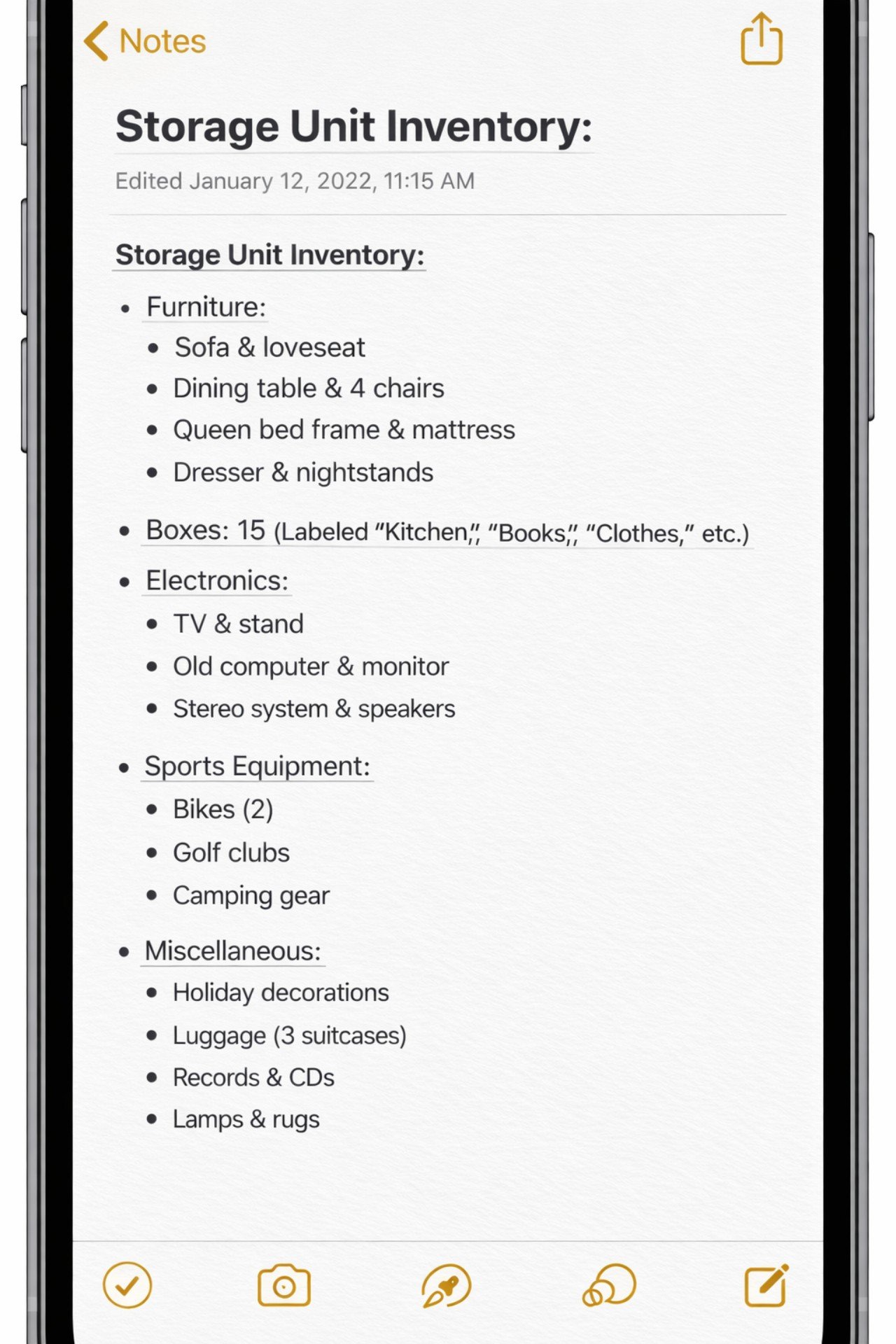
Step 8: Make a tiny inventory (the cheat code)
Not a spreadsheet. Relax.
Just a note on your phone:
- Box 1: decorations
- Box 2: lights
- Box 3: kids rotation toys
- Box 4: paperwork/files
Two minutes now saves two hours later, plus a mild breakdown.
Step 9: Stack smart, and don’t block the door like a maniac
- Stack boxes in stable columns
- Keep fragile up high
- Keep “need soon” items at the front
- Don’t pack so tight you have to shoulder-barge the door
If opening your unit feels like entering a collapsing mine, we’ve taken a wrong turn.
Step 10: A unit size sanity check (without the upsell nonsense)
If you’re forcing the door shut like you’re sealing a vault, the unit’s too small.
A good unit:
- fits your stuff with access
- lets you stack safely
- doesn’t require a full unload every visit
If you’re not sure what size you need, tell us what you’re storing and whether you’ll want access, and we’ll steer you right. No upsell. No drama.
Tamworth note: winter storage is not the time for “it’ll be fine”
Cold + damp + British optimism is a dangerous combo.
Brown Box Storage is indoor, secure self storage in Tamworth, which is a fancy way of saying your belongings won’t spend winter sweating inside a metal box.
The quick checklist (save this, print it, tattoo it, whatever)
- Sort by when you’ll need it (front/middle/back)
- Use consistent boxes
- Leave an access spine/front area
- Heavy down, light up
- Cover and dry furniture
- Label top + side, clearly
- Phone-note inventory
- Keep “need soon” at the front
If you’re in Tamworth and you want storage that doesn’t turn into a future hostage situation, get in touch with Brown Box Storage. Tell us what you’re storing and whether you’ll need access, and we’ll help you pick the right unit and pack it like a grown-up.