Moving house is not a “task”. It’s a full-contact sport, played with cardboard boxes, legal deadlines, and at least one person losing the kettle.
The stress isn’t just the lifting. It’s the uncertainty:
- The chain wobbles
- Completion dates shift
- You’re trying to pack while still living in the house like a normal human
- Everyone is tired, snappy, and suddenly has strong opinions about where the toaster “should” go
Self storage isn’t just somewhere to dump stuff. Used properly, it gives you time and breathing space so you can move in stages instead of doing everything in one frantic, sleep-deprived weekend.
If you’re moving in or around Tamworth, here’s exactly how to use a storage unit to make the whole thing calmer, cleaner, and far less likely to end in an argument over bubble wrap.
The real reason moving feels brutal: you’ve got no buffer
Most of the chaos comes from one problem:
Your stuff has nowhere safe to go while your dates and plans change.
Storage gives you a buffer zone. A safe “in-between” that means you can:
- Start packing early without living in a maze of boxes
- Cope with chain delays without your life exploding
- Move in two phases (essentials first, the rest later)
- Avoid panic decisions like “just shove it in the new house and deal with it later” (spoiler: you won’t)
When storage helps most during a house move
(5 very normal scenarios)
1) The chain wobble
Your buyer’s buyer’s solicitor is “waiting for information” and your completion date becomes a rumour.
Storage helps because: you can move non-essentials out early and stay flexible. If dates change, your belongings are already secure and you’re not repacking the same boxes three times.
2) You need to move out before you can move in
Temporary accommodation. Staying with family. Sitting on a mate’s sofa. The glamorous side of property chains.
Storage helps because: you can keep only what you need for a couple of weeks and store everything else. Living lightly is tolerable. Living among your entire house in someone else’s spare room is not.
3) You want to pack early without living like a hoarder
Packing “properly” takes time. Most people leave it too late and then it becomes panic-boxing at midnight.
Storage helps because: you can box up the non-essentials early and take them out of the way, instead of stacking them in every room until the house feels like a shipping depot.
4) Downsizing decisions under a deadline
Downsizing is a decision marathon: keep/sell/donate/bin. Doing it under a completion deadline makes people do daft things.
Storage helps because: you can move essentials into the new place and store “not sure yet” items. Then decide calmly later, instead of binning something valuable because you ran out of time.
5) Moving day is split across people and vehicles
One van. Two cars. A friend who’s “definitely coming” and then ghosts you at 8am.
Storage helps because: you can stage the move. Load storage first, then do the final run of essentials. Less pressure, less chaos, fewer “where’s the box with the passport” moments.
The “Breathing Space” plan: what to store first (so it actually reduces stress)
The trick is not to store random stuff. Store strategically.
Step 1: Store non-essentials you won’t need for 4–8 weeks
- Seasonal clothes and shoes
- Books, ornaments, spare cushions
- Hobby gear, gym kit, camping kit
- Spare bedding and towels
Step 2: Store the bulky stuff that slows moving day down
- Spare furniture you’re taking but don’t need daily
- Chairs, sideboards, extra tables
- The things that turn loading into a Tetris nightmare
Step 3: Store the “I can’t risk losing or breaking this” items
- Sentimental boxes
- Important paperwork (properly boxed and labelled)
- Electronics you won’t need immediately
Rule: keep day-to-day life running, but get the clutter and risk out of your way.
How to pack for storage during a move (without creating Future You’s worst nightmare)
Moving + storage works best when you can actually find things later.
- Label like you mean it. Not “kitchen”. Use “Kitchen: mugs + coffee + kettle bits”.
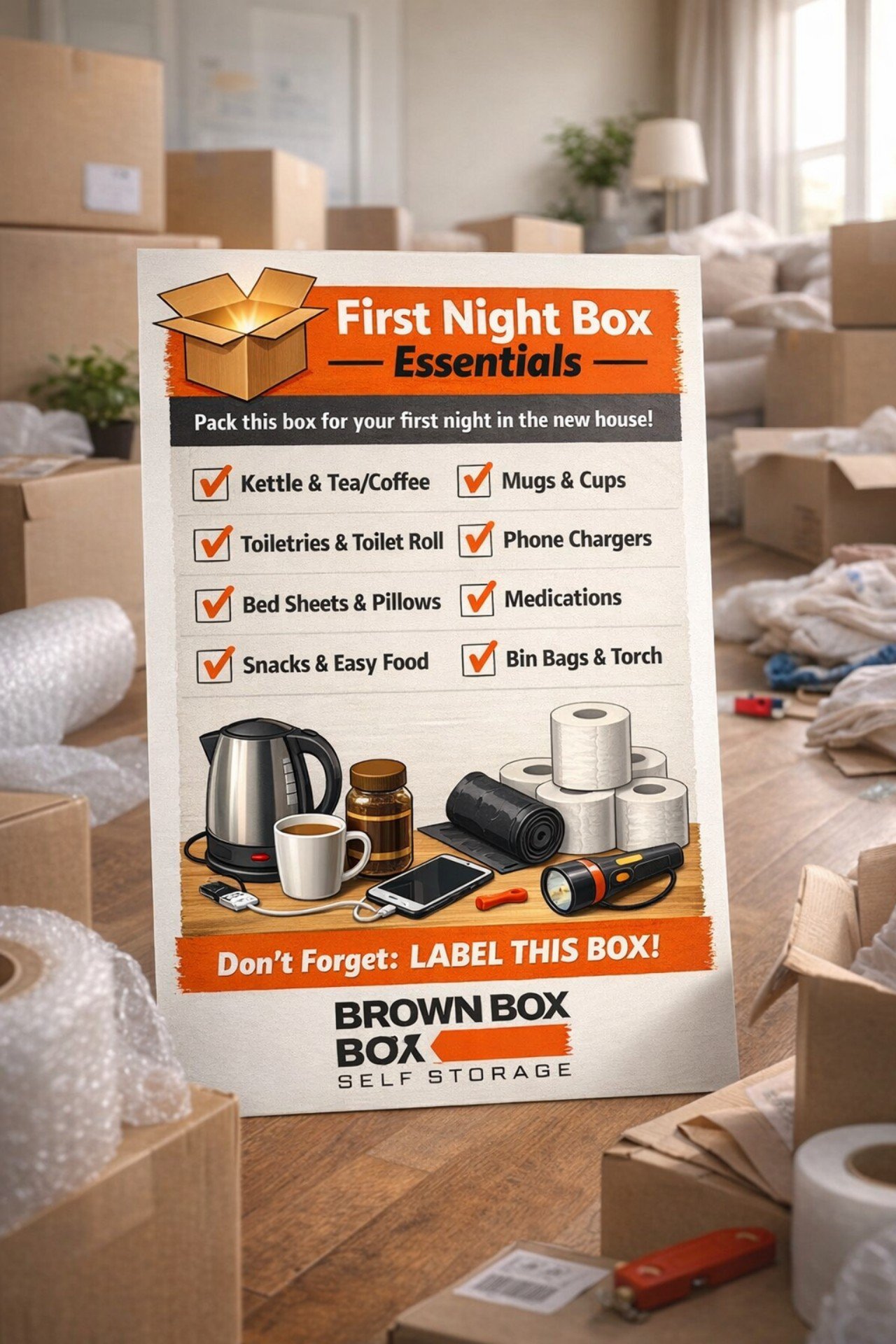
- Make one “first night” box: kettle, tea/coffee, mugs, loo roll, toiletries, phone chargers, bedding, meds, bin bags.
- Stack with access in mind: heavy stuff at the bottom, essentials near the front.
- Take quick photos of what went in each section of the unit. You will forget. Humans always forget.
Storage unit sizing (without getting upsold)
You don’t need a cathedral. You need the right buffer.
A sensible rule for moving-house storage:
- If you’re storing “non-essentials + a few bulky items”, you’ll usually need less than you think.
- If you’re storing most of the house because of a gap between moves, you’ll need more space and a plan.
If you’re not sure, we’ll help you size it based on what you’re storing. No weird sales games. Just get the right fit.
Why indoor storage makes moving easier
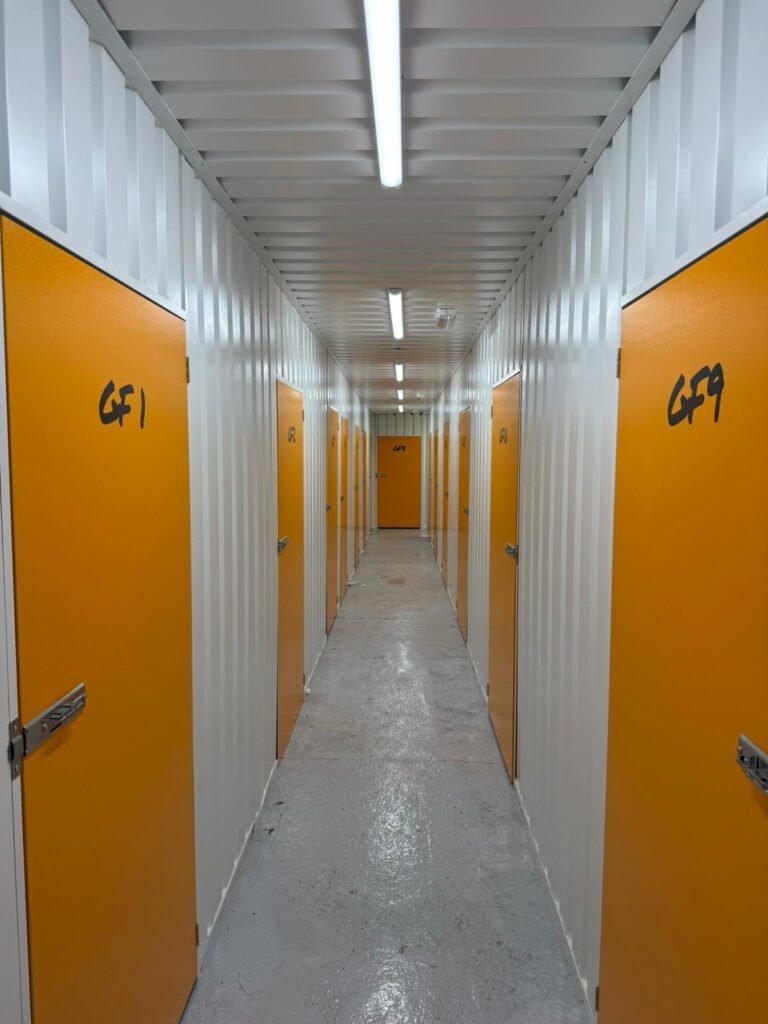
During a move you might be in and out of your unit a few times. Indoor storage is ideal because it’s:
- Clean and dry (good for furniture, boxes, and anything you actually want to keep)
- Easier to access when plans change
- Less “weather roulette” while you’re unloading/loading
Basically: less hassle at the exact time you don’t need extra hassle.
Moving house in Tamworth? Here’s the simple win
A storage unit turns “everything must happen at once” into:
- Store non-essentials early
- Move essentials on completion
- Bring the rest in when you’re ready
That’s the breathing space. That’s the whole magic trick.
Need breathing space while you move? Check prices / book here:
Need storage and a hand getting it there?
Brown Box can help with secure indoor storage in Tamworth and local Man & Van storage move-in help. Useful when your moving day plan has become “panic, lift heavy things, repeat”.